Navigating Recreational Cannabis Laws by State: Your Guide
recreational cannabis laws by state

Navigating Recreational Cannabis Laws by State: Your Guide

Demystify the ever-changing legal landscape of adult-use cannabis across the United States with this comprehensive resource.

Explore State Laws

Key Takeaways

  • ✓ As of late 2023, 24 states, 2 territories, and D.C. have legalized recreational cannabis.
  • ✓ Possession limits, purchase amounts, and consumption rules vary significantly by state.
  • ✓ Federal law still classifies cannabis as a Schedule I controlled substance, creating a complex legal dichotomy.
  • ✓ Many states have specific regulations regarding home cultivation, public consumption, and retail sales.

How It Works

1
Identify Your State's Status

Determine if your current location or intended destination has legalized recreational cannabis. This is the foundational step before considering any cannabis-related activities.

2
Understand Specific Regulations

Once legality is confirmed, delve into the precise laws governing possession limits, purchase amounts, and where cannabis can be consumed. These details are crucial for compliance.

3
Locate Licensed Retailers

In legal states, cannabis must be purchased from state-licensed dispensaries. Verify the legitimacy of any retailer to ensure you are buying legal and regulated products.

4
Be Aware of Federal vs. State Law

Always remember that despite state legality, cannabis remains federally illegal. This impacts interstate travel, federal lands, and certain employment situations.

The Evolving Landscape of Cannabis Legality in the US
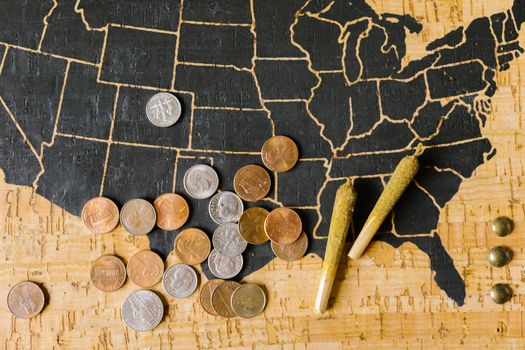
A USA map with cannabis joints and coins, symbolizing legal marijuana and its economic impact. Photo: RDNE Stock project / Pexels
The United States is currently experiencing a profound shift in its approach to cannabis, moving from decades of prohibition towards widespread legalization, particularly for recreational adult use. This transformation is not uniform, however, resulting in a complex patchwork of recreational cannabis laws by state. What is perfectly legal in one state can lead to severe penalties just across its border. Understanding this intricate legal tapestry is paramount for consumers, businesses, and policymakers alike. The journey began in 2012 when Colorado and Washington became the first states to legalize recreational marijuana, setting a precedent that many others would eventually follow. Since then, the momentum has steadily grown, driven by changing public opinion, the desire for new tax revenues, and a growing recognition of the social justice implications of prohibition. Each state that has embraced adult-use cannabis has done so with its own unique set of regulations, reflecting local priorities, political climates, and historical contexts. These variations encompass everything from the legal age for consumption, typically 21, to the amount of cannabis an individual can possess, the number of plants they can cultivate at home, and the types of products available for sale. For instance, some states allow for the sale of a wide array of products including flower, edibles, concentrates, and topicals, while others may have more restrictive product offerings. The tax structures also differ significantly, with some states imposing higher excise taxes than others, which directly impacts consumer prices and state revenue. Furthermore, the licensing processes for cultivators, processors, and dispensaries are highly individualized, creating distinct market dynamics in each legal jurisdiction. This dynamic environment means that staying informed is not a one-time task but an ongoing commitment. Laws can and do change, sometimes with little notice, as states refine their regulatory frameworks based on experience, public feedback, and emerging challenges. For anyone considering engaging with recreational cannabis, whether as a resident or a visitor, a thorough understanding of the specific laws in their relevant state is not just advisable, it is absolutely essential to avoid legal complications. This guide aims to provide a comprehensive overview, highlighting the key differences and commonalities among the states that have legalized adult-use cannabis, helping you navigate this fascinating and often confusing legal terrain. The interplay between state and federal law also adds another layer of complexity, as federal prohibition still looms large, affecting everything from banking to interstate commerce for cannabis businesses. This dichotomy creates a unique set of challenges and opportunities within the industry.

Key Differences in State-Specific Recreational Cannabis Laws
A red sign featuring a cannabis emblem on a city building facade, indicating a store direction. Photo: Wendy Wei / Pexels
While the overarching goal of adult-use legalization is generally consistent across states – to allow individuals aged 21 and over to legally purchase and consume cannabis – the specifics of how this is implemented vary dramatically. These differences are critical to understand to ensure compliance and avoid potential legal issues. One of the most common variations lies in possession limits. For example, in Colorado, adults can possess up to one ounce of cannabis flower, while in Oregon, the limit is two ounces. California allows up to one ounce of flower and eight grams of concentrate, showcasing how different states define and limit various cannabis product types. These limits often extend to how much cannabis can be purchased in a single transaction, or over a specific period, such as a day or a week. Home cultivation is another area with significant divergence. Many states that have legalized recreational cannabis also permit adults to grow a limited number of plants for personal use. However, the exact number of plants can range from six per household (e.g., California, Colorado) to twelve per household (e.g., Vermont). Some states may impose additional restrictions, such as requiring plants to be grown in an enclosed, locked space, or out of public view. Conversely, a few legal states, like Washington, do not permit home cultivation for recreational purposes at all, reserving cultivation solely for licensed commercial operations. Public consumption laws are almost universally restrictive. While cannabis may be legal to possess, consuming it in public spaces remains largely prohibited across all legal states. This includes parks, sidewalks, public transportation, and often even in private vehicles. Designated consumption lounges are slowly emerging in some cities, offering legal spaces for consumption, but these are still relatively rare. The penalties for public consumption can range from minor fines to more significant citations, depending on the state and local ordinances. Furthermore, the types of cannabis products available for sale can differ. While most legal states offer flower, edibles, and concentrates, the potency limits for edibles (e.g., 10mg THC per serving, 100mg per package) are often strictly regulated. Some states may also have specific rules regarding packaging, labeling, and testing requirements, all designed to ensure consumer safety and product quality. The regulatory bodies overseeing the cannabis industry also vary by state, from dedicated cannabis control commissions to existing alcohol and tobacco regulatory agencies. These bodies are responsible for licensing, enforcement, and ongoing rule-making, making them crucial points of contact for businesses and sources of information for consumers. Understanding these nuances is not just about avoiding legal trouble; it's about being an informed and responsible cannabis consumer in a rapidly evolving legal landscape.

Federal Prohibition vs. State Legalization: A Persistent Conflict

One of the most perplexing aspects of recreational cannabis laws in the US is the ongoing conflict between state legalization and federal prohibition. Despite the growing number of states that have legalized cannabis for medical or recreational use, it remains classified as a Schedule I controlled substance under the federal Controlled Substances Act. This classification places cannabis in the same category as heroin and LSD, deeming it to have a high potential for abuse and no accepted medical use, a stance that directly contradicts the scientific consensus and the policies of numerous states. This federal-state dichotomy creates a complex legal environment with significant implications. For individuals, it means that while you might legally purchase and consume cannabis in a state like California, transporting it across state lines, even to another legal state, is a federal crime. Similarly, carrying cannabis onto federal property, such as national parks, federal courthouses, or airports, is illegal, regardless of the state's laws. This is a critical point of confusion for many travelers and residents alike, often leading to unintended legal consequences. For businesses, the federal prohibition presents even greater challenges. Cannabis businesses, even those operating entirely within a state that has legalized, are largely cut off from traditional banking services because banks are federally regulated and fear penalties for engaging with federally illegal substances. This forces many cannabis businesses to operate on a cash-only basis, creating security risks and operational inefficiencies. Furthermore, federal tax laws, specifically Section 280E of the IRS tax code, prevent cannabis businesses from deducting ordinary business expenses, leading to significantly higher effective tax rates compared to other industries. The lack of federal recognition also hinders scientific research into cannabis, as the process for obtaining federal approval to study Schedule I substances is notoriously arduous. This stifles potential advancements in understanding the plant's medical benefits and risks. Efforts to reconcile this federal-state conflict have been ongoing, with various legislative proposals introduced in Congress to decriminalize or deschedule cannabis. However, as of now, none have successfully passed both chambers and been signed into law. The current approach often involves a policy of non-interference from the Department of Justice, as outlined in guidance like the Cole Memorandum (though rescinded, its principles are often still observed). This allows states to implement their cannabis programs without direct federal intervention, but it doesn't change the underlying federal illegality. This creates a precarious situation where the legal status of cannabis is subject to the whims of federal policy shifts and political administrations. Understanding this fundamental conflict is crucial for anyone navigating the world of cannabis in the United States, as it shapes everything from consumer behavior to industry development and future legal reforms.

Tips for Responsible Cannabis Consumption in Legal States

Navigating the world of recreational cannabis, even in states where it's legal, requires a degree of responsibility and awareness. Here are essential tips to ensure a safe and compliant experience: * **Know Your Limits:** Start with a low dose, especially with edibles, and wait to understand the effects before consuming more. Different products have varying potencies and onset times. * **Purchase from Licensed Dispensaries Only:** This ensures products are tested for contaminants and accurately labeled for potency. Avoid unregulated sources to protect your health and stay within legal bounds. * **Understand Possession and Purchase Limits:** Always be aware of how much cannabis you can legally possess and purchase at one time in your specific state. These limits apply to flower, concentrates, and edibles. * **Do Not Consume in Public:** With very few exceptions (designated consumption lounges), public consumption of cannabis is illegal in all states, even those where it's legal to purchase. This includes parks, sidewalks, and vehicles. * **Never Drive Under the Influence:** Just like alcohol, driving while impaired by cannabis is illegal and dangerous. Designate a sober driver or use ride-sharing services. * **Keep it Out of Reach of Minors:** Store all cannabis products in child-proof containers and in locations inaccessible to children and pets. * **Be Aware of Federal Lands:** Federal law supersedes state law on federal properties, including national parks, forests, and military bases. Possession of cannabis on these lands is illegal. * **Do Not Cross State Lines with Cannabis:** Even if both states have legalized cannabis, transporting it across state borders is a federal crime. * **Respect Local Ordinances:** Some cities or counties within a legal state may have additional restrictions or prohibitions on cannabis. Always check local laws. * **Educate Yourself Continuously:** Cannabis laws are still evolving. Stay informed about any changes to state or local regulations to remain compliant. Resources from state cannabis control boards are excellent for up-to-date information. By following these guidelines, you can enjoy recreational cannabis responsibly and safely while adhering to the diverse and often complex legal frameworks established by individual states.

Comparison

FeatureCaliforniaColoradoIllinoisNew York
Legal Age21+21+21+21+
Possession Limit (Flower)1 oz1 oz30g3 oz
Home Cultivation (Plants)6 plants6 plants (3 mature)5 plants (medical only)6 plants (3 mature)
Public Consumption✓ (where tobacco is allowed)
Licensed Retailers

What Readers Say

"This guide on recreational cannabis laws by state was incredibly helpful for my recent road trip. It clarified so many confusing points about possession limits and where I could legally consume. A must-read for any cannabis enthusiast!"

Sarah J. · Denver, CO

"As a new resident to a legal state, I was overwhelmed. This article broke down the recreational cannabis laws by state in an easy-to-understand format, especially the differences in home cultivation rules. Highly recommend!"

Mark T. · Portland, OR

"I used to just guess, but after reading this, I feel much more confident about navigating recreational cannabis laws by state. It prevented me from making a mistake regarding public consumption during my last trip to New York."

Jessica L. · Boston, MA

"While very informative, I wish there was a more direct comparison table for all 24 states. Still, the detailed explanations for recreational cannabis laws by state were excellent and covered all the main concerns I had."

David P. · Chicago, IL

"Even living in a legal state, it's easy to get complacent. This article served as a great refresher on recreational cannabis laws by state, particularly the federal vs. state conflict, which is often overlooked."

Emily R. · Los Angeles, CA

Frequently Asked Questions

Which states have legalized recreational cannabis as of today?

As of late 2023, 24 states, 2 territories (Guam and Northern Mariana Islands), and the District of Columbia have legalized recreational cannabis for adult use. This list is continually growing, so it's always best to check the most current information from official state sources before making any assumptions.

Is it safe to travel with cannabis between legal states?

No, it is not safe or legal to travel with cannabis across state lines, even if both the origin and destination states have legalized it. Cannabis remains federally illegal, and federal law governs interstate commerce and transportation. Doing so can lead to federal charges, regardless of state laws.

How do I find a legal dispensary in a state where cannabis is legal?

To find a legal dispensary, you should visit the official website of the state's cannabis regulatory agency (e.g., California's Department of Cannabis Control, Colorado's Marijuana Enforcement Division). These sites typically provide lists or maps of licensed retailers. Avoid purchasing from unlicensed sources to ensure product safety and legality.

What are the general costs associated with recreational cannabis?

The cost of recreational cannabis varies significantly by state, product type, and potency. Factors like state excise taxes, cultivation costs, and market demand all play a role. Expect prices to include sales tax and often an additional cannabis-specific tax, making them generally higher than in illicit markets but ensuring product quality and safety.

How do state recreational cannabis laws differ from medical cannabis laws?

Recreational cannabis laws typically allow any adult over 21 to purchase and consume cannabis without a doctor's recommendation. Medical cannabis laws, however, require a qualifying medical condition and a doctor's recommendation or state-issued medical card. Medical programs often have higher possession limits, lower taxes, and allow for a wider range of products or cultivation privileges.

Who should be most concerned about understanding recreational cannabis laws by state?

Anyone planning to purchase, possess, or consume cannabis in the US should thoroughly understand the recreational cannabis laws by state. This includes residents of legal states, tourists visiting legal states, and individuals who might travel through or near states with different cannabis policies. Misunderstanding these laws can lead to significant legal consequences.

What are the common risks if I violate state recreational cannabis laws?

Violating state recreational cannabis laws can lead to various penalties, including fines, confiscation of products, community service, and even arrest or jail time for more serious offenses like exceeding possession limits or selling without a license. Public consumption often results in fines. Always prioritize understanding and adhering to local regulations.

What future trends can we expect in recreational cannabis laws by state?

Future trends likely include more states legalizing recreational cannabis, potential federal decriminalization or descheduling, and continued refinement of existing state regulations. We may see an increase in consumption lounges, more standardized testing protocols, and further integration of cannabis businesses into mainstream financial systems as federal policy evolves.

Navigating the diverse landscape of recreational cannabis laws by state requires diligence and informed decision-making. By staying updated and understanding specific regulations, you can ensure a safe and compliant experience. Empower yourself with knowledge and explore the evolving world of cannabis responsibly.

Topics: recreational cannabis laws by stateUS cannabis legalitystate marijuana lawsadult-use cannabis regulationscannabis possession limits
Leo List
Brampton weed
Adultwork