Navigating Cannabis Laws by State USA: Your Essential Guide
cannabis laws by state USA

Navigating Cannabis Laws by State USA: Your Essential Guide

Demystify the patchwork of cannabis regulations across the United States for informed decisions.

Explore State Laws

Key Takeaways

  • ✓ Cannabis legality varies significantly from state to state.
  • ✓ Federal law still classifies cannabis as a Schedule I controlled substance.
  • ✓ Over two-thirds of US states have legalized medical cannabis.
  • ✓ A growing number of states permit adult-use recreational cannabis.
  • ✓ Penalties for cannabis offenses range from fines to severe imprisonment, depending on the state and offense.

How It Works

1
Understand Federal vs. State Law

Recognize that while many states have legalized cannabis, it remains federally illegal. This creates a complex legal landscape where state-level protections may not apply on federal land or across state lines.

2
Identify Your State's Status

Determine if your state or the state you plan to visit has legalized cannabis for medical, recreational, or both uses. This is the foundational step for understanding local regulations and restrictions.

3
Review Specific Regulations

Dive into the details of possession limits, cultivation rules, purchasing requirements, and consumption guidelines for your specific state. Each state has unique nuances that dictate legal cannabis activities.

4
Stay Informed of Changes

Cannabis laws are constantly evolving, with new legislation and amendments frequently introduced. Regularly check reliable sources for updates to ensure you remain compliant with current regulations.

The Complex Tapestry of US Cannabis Legality

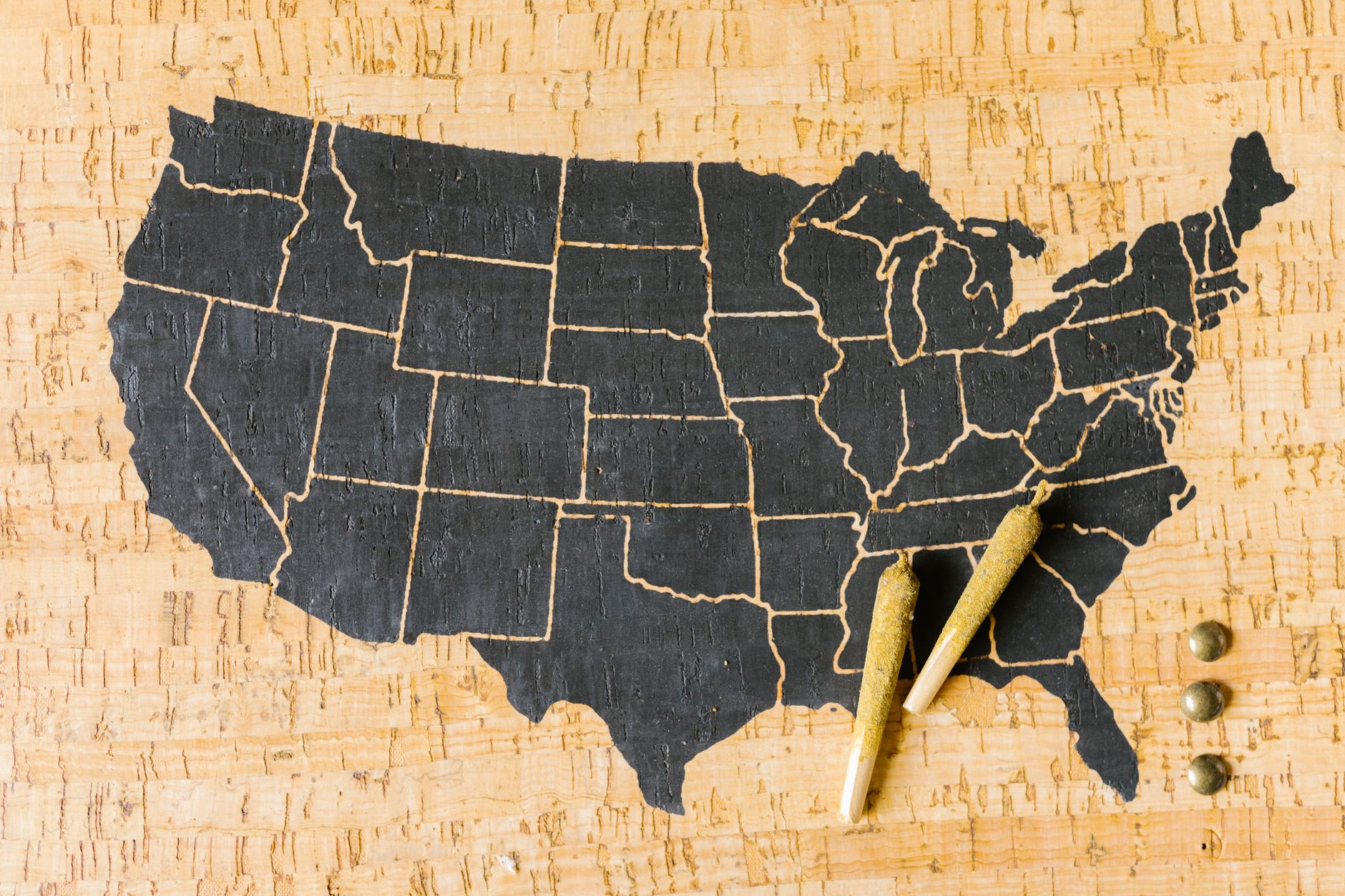
Two cannabis joints placed over a USA map, symbolizing marijuana legalization. Photo: RDNE Stock project / Pexels
The legal landscape surrounding cannabis in the United States is a dynamic and often bewildering patchwork of state and federal regulations. While public opinion has shifted dramatically in favor of legalization over the past two decades, federal law continues to classify cannabis as a Schedule I controlled substance under the Controlled Substances Act. This federal prohibition creates a unique tension, as states increasingly move to legalize cannabis for medical or recreational use, or both. Understanding these cannabis laws by state USA is not merely an academic exercise; it is crucial for anyone residing in, traveling through, or conducting business related to cannabis within the United States. At the federal level, cannabis remains illegal, meaning that transporting it across state lines, even between two states where it is legal, constitutes a federal crime. This also impacts banking and taxation for cannabis businesses, as federally insured banks are hesitant to work with an industry deemed illegal by the national government. The Cole Memorandum, issued by the Department of Justice in 2013, offered some guidance by suggesting federal prosecutors should generally defer to state and local authorities in states that have robust regulatory and enforcement schemes. However, this memorandum was rescinded in 2018, leading to renewed uncertainty, though federal enforcement actions against state-legal cannabis operations have not significantly increased. This inherent conflict between state and federal statutes is a defining characteristic of the cannabis industry in the US and presents ongoing challenges for businesses, consumers, and law enforcement alike. As of early 2024, a significant majority of states have some form of legalized cannabis, whether it be for medical purposes, recreational adult use, or both. However, the specifics of these laws vary wildly. Some states have highly regulated markets with dispensaries, cultivation facilities, and testing requirements, while others allow only for low-THC cannabis products, or have decriminalized possession without establishing a full legal market. The nuances extend to possession limits, cultivation rights for individuals, purchasing restrictions, and even where cannabis can be consumed. For instance, a state might allow recreational sales but prohibit public consumption, or permit medical use but only for a very limited list of qualifying conditions. This variability underscores the necessity of a state-by-state analysis for anyone seeking to understand their legal standing regarding cannabis. Ignoring these distinctions can lead to serious legal repercussions, ranging from significant fines to incarceration, demonstrating the critical importance of staying informed about the specific regulations in any given jurisdiction. The evolution of these laws also means that what was true last year may not be true today, requiring continuous vigilance and education.

Medical vs. Recreational Cannabis: A State-by-State Breakdown
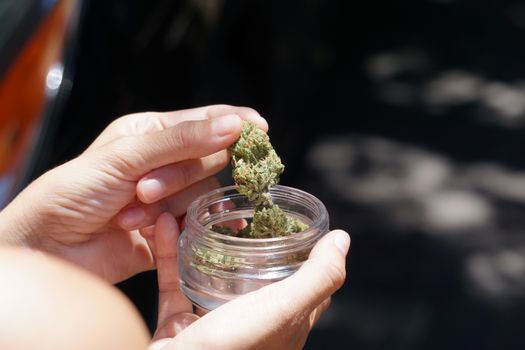
Close-up of hands holding cannabis buds in a glass jar outside in daylight. Photo: Elsa Olofsson / Pexels
The distinction between medical and recreational cannabis laws forms the primary fault line in the US legal landscape. Medical cannabis programs typically require patients to obtain a recommendation from a licensed physician for a qualifying medical condition, followed by registration with a state program to receive a medical cannabis card. These programs often come with specific regulations regarding the types of products available, possession limits, and sometimes even home cultivation rights for registered patients. Qualifying conditions vary widely, from chronic pain and cancer to epilepsy and PTSD, depending on the state. For example, some states have very expansive lists of conditions, while others are quite restrictive. Patients with medical cards often benefit from lower taxes on cannabis products and higher possession limits compared to adult-use consumers, reflecting the therapeutic intent of these programs. Recreational, or adult-use, cannabis laws permit individuals aged 21 and older to purchase and possess cannabis for personal use, similar to alcohol regulations. These states have established regulated markets with licensed dispensaries, where adults can buy various cannabis products, including flower, edibles, concentrates, and topicals. While recreational legalization offers broader access, it often comes with strict regulations on public consumption, advertising, and packaging, aimed at preventing underage use and promoting responsible consumption. The tax revenues generated from recreational cannabis sales are often substantial, contributing to state budgets and funding various public programs. However, even within recreational states, there can be significant differences. Some states allow for limited home cultivation, while others strictly prohibit it. Possession limits also vary, with some states allowing a few ounces of flower and others restricting it to a much smaller quantity. Understanding which states fall into which category, and the specific rules within each, is paramount. For instance, as of early 2024, states like California, Colorado, Illinois, and New York have legalized both medical and recreational cannabis, establishing robust regulatory frameworks for both. Other states, such as Florida, Ohio, and Pennsylvania, have well-established medical cannabis programs but have not yet legalized recreational use. Conversely, a handful of states still maintain strict prohibition on all forms of cannabis, with penalties ranging from misdemeanors to felonies. The trend, however, is clearly moving towards greater legalization, with more states considering and passing both medical and recreational cannabis legislation each year. This ongoing evolution means that staying current with specific state statutes is not a one-time check but an ongoing necessity for anyone navigating the US cannabis market. The legal framework directly impacts consumer access, business operations, and the overall social acceptance of cannabis.

Navigating the Nuances: Possession, Cultivation, and Consumption Across States
A cannabis leaf with the word 'cannabis' spelled out in letter tiles on a beige background. Photo: Alesia Kozik / Pexels
Beyond the broad categories of medical and recreational legalization, the devil is truly in the details when it comes to state cannabis regulations. Each state that has legalized cannabis, in any form, has carved out its own specific rules regarding possession limits, personal cultivation, and where cannabis can legally be consumed. These nuances are critical for both residents and visitors to understand, as ignorance of the law is no excuse and can lead to significant legal troubles. Possession limits are one of the most variable aspects. For instance, in a recreational state like Colorado, adults 21 and over can possess up to 1 ounce of cannabis flower, while in Oregon, the limit is 2 ounces. Medical patients often have higher possession limits, reflecting their therapeutic needs. The form of cannabis also matters; limits for concentrates, edibles, and tinctures are usually calculated based on their THC content or equivalent weight to flower. Crossing state lines with cannabis, even between two legal states, remains a federal crime, underscoring the importance of consuming or disposing of cannabis before interstate travel. Personal cultivation is another area with significant state-by-state differences. Many recreational states, such as California, allow adults to cultivate a limited number of cannabis plants (typically 6 mature plants) for personal use at home. However, some recreational states, like Washington, do not permit home cultivation for recreational users, reserving it only for medical patients or prohibiting it entirely. States with medical programs also vary; some allow patients to grow their own, while others require all cannabis to be sourced from licensed dispensaries. Even where cultivation is permitted, there are often strict rules regarding where plants can be grown (e.g., in an enclosed, locked space), visibility from public view, and plant limits per household, not just per individual. Consumption laws are equally diverse and often lead to confusion. While many states have legalized possession, public consumption is almost universally prohibited. This means consuming cannabis in public parks, on sidewalks, or even in a parked car can lead to citations or arrests, similar to open container laws for alcohol. Designated consumption lounges are slowly emerging in some cities and states, offering legal spaces for public use, but these are still relatively rare. Most laws restrict consumption to private residences, and even then, landlords may have policies prohibiting cannabis use on their property. Furthermore, driving under the influence of cannabis is illegal in all states, and impairment standards and testing methods vary, adding another layer of complexity. Vaping cannabis in non-smoking areas is also typically prohibited, falling under broader tobacco or smoking bans. The lack of uniformity across these regulations necessitates a careful review of specific state and local ordinances before engaging in any cannabis-related activity.

Staying Compliant: Tips for Navigating Evolving Cannabis Legislation
Cannabis leaf alongside Scrabble tiles spelling 'medicine', highlighting natural remedies. Photo: Alesia Kozik / Pexels
Navigating the ever-changing landscape of cannabis laws by state USA requires diligence and a proactive approach to compliance. As legislation continues to evolve, what is legal today might be subject to new restrictions or expansions tomorrow. Staying informed is the most critical tip for anyone involved with cannabis, whether as a consumer, patient, or business owner. Here are some essential tips for staying compliant and avoiding legal pitfalls: * **Always Verify Current State Laws:** Do not rely on outdated information or assumptions. Before traveling to a new state or engaging in any cannabis activity, consult official state government websites (e.g., Department of Health, Cannabis Control Commission) or reputable legal resources for the most current regulations. Laws can change quickly, so regular checks are advisable. * **Understand Local Ordinances:** State laws often set a baseline, but cities and counties can impose additional restrictions. For example, a state might allow dispensaries, but a specific city could ban them. Always check local municipal codes for specific rules on zoning, public consumption, and business operations. * **Never Cross State Lines with Cannabis:** Despite increasing state-level legalization, cannabis remains federally illegal. Transporting cannabis across state borders, even between two legal states, is a federal offense and carries significant penalties. This includes flying with cannabis, even if departing from and arriving in legal states. * **Respect Possession and Cultivation Limits:** Adhere strictly to the quantity limits for possession and the number of plants allowed for home cultivation. These limits are precise and exceeding them can lead to criminal charges, even in legal states. * **Consume Responsibly and Privately:** Public consumption is largely prohibited, even in recreational states. Limit consumption to private residences or designated consumption lounges where permitted. Driving under the influence of cannabis is illegal everywhere and carries severe penalties. * **Keep Medical Documentation Accessible (for Medical Users):** If you are a medical cannabis patient, always carry your state-issued medical cannabis card and any relevant doctor's recommendations. This documentation is crucial for proving your legal right to possess cannabis. * **Be Aware of Federal Property:** Federal lands (national parks, federal buildings, military bases) are subject to federal law, where cannabis is illegal, regardless of the state's laws. Avoid possessing or consuming cannabis on any federal property. * **For Businesses: Seek Legal Counsel:** Cannabis businesses operate in a highly regulated environment. Engaging experienced legal counsel specializing in cannabis law is essential for navigating licensing, compliance, taxation, and operational challenges. By following these guidelines, individuals and businesses can better navigate the complexities of US cannabis laws and minimize their risk of legal complications. The patchwork nature of these regulations demands constant vigilance and a commitment to informed decision-making.

Comparison

FeatureStates with Adult-Use & MedicalStates with Medical OnlyStates with CBD/Low-THC OnlyStates with Full Prohibition
Example StatesCA, CO, MA, NYFL, PA, OH, LAGA, TX, NCID, KS, NE
Recreational Sales Permitted
Medical Cards RequiredOptional (for benefits)Optional (for specific conditions)
Home Cultivation Allowed (Adult-Use)Often (e.g., 6 plants)Rarely
Possession Limits (Adult-Use)Typically 1-2 oz flowerN/AN/AN/A
Public Consumption Legality
Federal Legality ImpactHigh ConflictMedium ConflictLow ConflictNo Conflict

What Readers Say

"This guide on cannabis laws by state USA was incredibly helpful for understanding Colorado's specific rules versus other states. It clearly explained possession limits and public consumption laws, which can be confusing for visitors."

Sarah J. · Denver, CO

"As a medical patient, navigating different state laws can be a nightmare. This article provided a clear overview of medical cannabis laws by state USA and helped me understand what to expect when traveling."

Mark T. · Miami, FL

"The section on cultivation laws across states was exactly what I needed. It clarified Oregon's home grow rules and helped me avoid potential issues, making my personal cultivation efforts fully compliant."

Emily R. · Portland, OR

"While comprehensive, the article could benefit from a more interactive map. However, the breakdown of medical vs. recreational cannabis laws by state USA was very informative and helped me understand Illinois' regulations better."

David L. · Chicago, IL

"Even in a prohibition state like Idaho, understanding the broader US cannabis laws is important. This guide provided crucial context on the federal-state conflict and why Idaho's stance is so different from its neighbors."

Jessica M. · Boise, ID

Frequently Asked Questions

What is the current federal stance on cannabis in the USA?

Federally, cannabis remains classified as a Schedule I controlled substance under the Controlled Substances Act, making it illegal at the national level. This creates a conflict with states that have legalized cannabis for medical or recreational use, as federal law technically supersedes state law, though enforcement priorities have varied.

Can I travel with cannabis between states where it's legal?

No, traveling with cannabis across state lines, even between two states where it is legal, is a federal crime. This includes air travel and driving. Federal jurisdiction applies at state borders and airports, making such transportation illegal.

How do I find out my state's specific cannabis laws?

The best way to find your state's specific cannabis laws is to visit your state's official government website, typically under the Department of Health, Department of Revenue, or a dedicated Cannabis Control Commission. These sites provide the most up-to-date and accurate legal information.

Is cannabis consumption legal in public spaces in recreational states?

Generally, no. Even in states where recreational cannabis is legal, public consumption is almost universally prohibited. Consumption is typically restricted to private residences or, in some limited areas, licensed consumption lounges. Violations can result in fines.

What is the difference between decriminalization and legalization?

Decriminalization means that possessing small amounts of cannabis is treated as a minor offense, similar to a traffic ticket, with no jail time. Legalization, on the other hand, means that cannabis is legal for adults to possess and often purchase through regulated markets, with established rules for sales, cultivation, and taxation.

Who is eligible for medical cannabis?

Eligibility for medical cannabis varies significantly by state. Most states require a diagnosis of one or more qualifying medical conditions (e.g., chronic pain, epilepsy, cancer) from a licensed physician, followed by registration with the state's medical cannabis program to obtain a patient card.

Are there any risks associated with purchasing cannabis from unlicensed sources?

Yes, purchasing cannabis from unlicensed sources carries significant risks. Unlicensed products may not be tested for contaminants like pesticides, heavy metals, or mold, and their potency may be inaccurate. Legally, it can also lead to criminal charges for both the buyer and seller.

What are the future trends for cannabis laws in the USA?

The trend indicates continued movement towards broader legalization, with more states likely to adopt medical and recreational programs. Federal reform, possibly through descheduling or rescheduling cannabis, is also a growing possibility, which would significantly reduce the federal-state conflict and streamline banking and research.

Understanding the intricate web of cannabis laws by state USA is essential for compliance and informed decision-making. Stay updated with the latest regulations to navigate this evolving landscape confidently. Empower yourself with knowledge to ensure your cannabis interactions are always legal and safe.

Topics: cannabis laws by state USAmarijuana legality USstate cannabis regulationsmedical marijuana lawsrecreational cannabis states
Leo List

DK Escorts LU Escorts AT Escorts SE Escorts FI Escorts CH Escorts DE Escorts HR Escorts IE Escorts GR Escorts CZ Escorts NO Escorts BE Escorts FR Escorts SI Escorts IL Escorts NL Escorts PL Escorts HU Escorts ES Escorts IT Escorts PT Escorts SK Escorts RO Escorts ZA Escorts UY Escorts US Escorts UK Escorts NZ Escorts AU Escorts
Brampton weed
Adultwork EstrelaBet Vai de Bet R7 Bet Betão Galera Bet Rainbet Bet9ja Shop SportyBet BetKing Sisal Loto Foot Hollywoodbets YesPlay Odibets RushBet Jugabet BetWarrior BetCity MSport betPawa Fortebet